
The Mistake Most People Make First
The door won't budge, so the instinct is to hit the remote button again and again, or walk inside and push the wall switch harder. It's tempting because it feels like the fastest fix, and sometimes the door finally lurches free on the third or fourth try. But that lurch usually means something gave way under strain: a stripped gear in the opener, a bent track bracket, or a seal that just tore loose from the concrete. Forcing a stuck door doesn't fix the underlying problem, it just moves the damage from "annoying" to "expensive."
The better first move is to stop, open the door manually (after pulling the emergency release cord) if it moves freely by hand, and figure out why the opener was struggling in the first place.
Symptoms to Watch For
- The door looks sealed to the ground and needs a hard tug or a kick at the bottom corner to break free.
- The opener strains audibly, the motor sound changes pitch, then the door stalls partway up.
- The door reverses on its own right after you give the command to open, as if something is blocking it.
- Movement is noticeably slower than normal, especially in the first few feet of travel.
- A thin ice film or frost line is visible where the bottom seal meets the driveway.
Sacramento winters don't bring heavy ice, but inland valley mornings can still dip close to freezing, and a damp driveway from overnight rain can leave a thin frozen film right where the rubber seal sits. That's often enough to glue the door down without a single icicle in sight.
Causes, in the Order a Technician Checks Them
1. Frozen or Stuck Bottom Seal
This is the first thing to rule out because it's the most common and the easiest to fix. Moisture under the rubber astragal freezes overnight and bonds the door to the slab. The fix is simple: never pry it with a crowbar. Pour warm (not boiling) water along the seal line to loosen it, then run the door through a full cycle to check it moves freely. If the seal is cracked, brittle, or torn from repeated freeze-and-pull cycles, it should be replaced, a flexible weatherstrip holds up far better through a Sacramento winter than one already weathered from a hot, dusty summer.
2. Thickened or Dried-Out Lubricant
Next, a technician checks the rollers, hinges, and springs. Lubricant that was fine in August can stiffen in cold temperatures, especially if it was never the right type to begin with. Household oil or WD-40 isn't a lubricant for this job, it attracts dust and dries out fast. A silicone-based garage door lubricant applied to hinges, rollers, and the spring coils restores smooth motion and is a five-minute task that prevents a lot of cold-weather sluggishness.
3. Spring Tension Changes
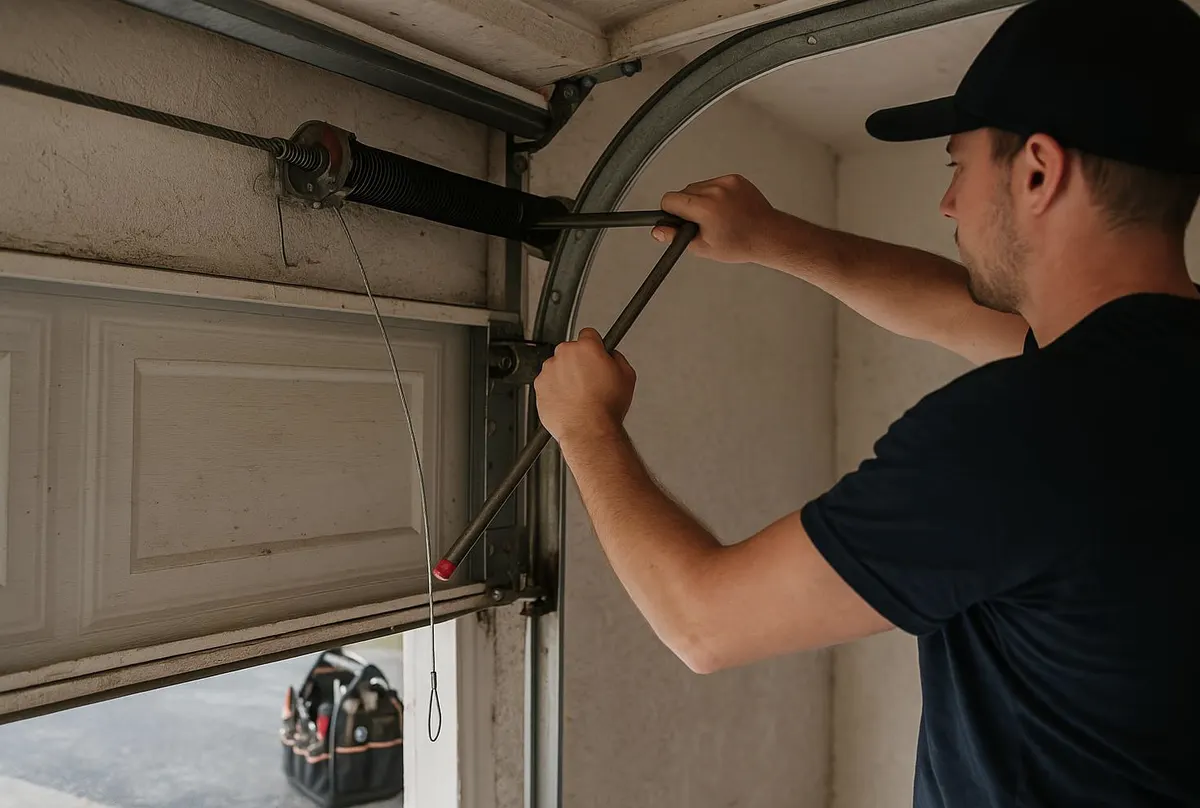
Metal contracts slightly in colder weather, and torsion springs that were already near the end of their lifespan can feel noticeably weaker on cold mornings. If the door feels heavy when lifted manually, or the opener strains every time regardless of lubrication, worn springs are often the real issue, the cold just makes it obvious sooner. Spring replacement isn't a DIY job; the tension involved can cause serious injury, and it's one of the most common service calls once temperatures drop.
4. Opener Force and Limit Settings
If the door reverses or stalls but the seal is clear and everything is lubricated, the opener's force settings may need adjusting. Openers sense resistance and stop or reverse to avoid damage or injury, and a door that's moving slightly stiffer in cold weather can trip that safety threshold. A technician resets the force and limit settings so the opener recognizes normal cold-weather resistance without overcorrecting.
5. Track Alignment and Roller Condition
Last on the list because it's less common but still worth ruling out: metal contraction in cold weather can expose a track that was already slightly misaligned from age or a minor bump. Combined with stiff rollers, this creates binding that looks like a cold-weather issue but is really a mechanical one that will persist year-round once temperatures warm up.
When to Call Sacramento Garage Door
If warm water and a quick application of lubricant don't solve it, or if the opener strains every single morning once the weather turns, it's time to call. Sacramento Garage Door handles both garage door maintenance for a seasonal tune-up of seals, rollers, and lubrication, and spring replacement when the real issue is tension loss rather than temperature. A technician can also recheck opener force settings as part of a standard repair visit, so the fix actually holds through the rest of the season.
Don't wait for a stuck door to turn into a broken spring or a stripped opener gear. Call Sacramento Garage Door today to get your door running smoothly through the rest of the Sacramento winter.